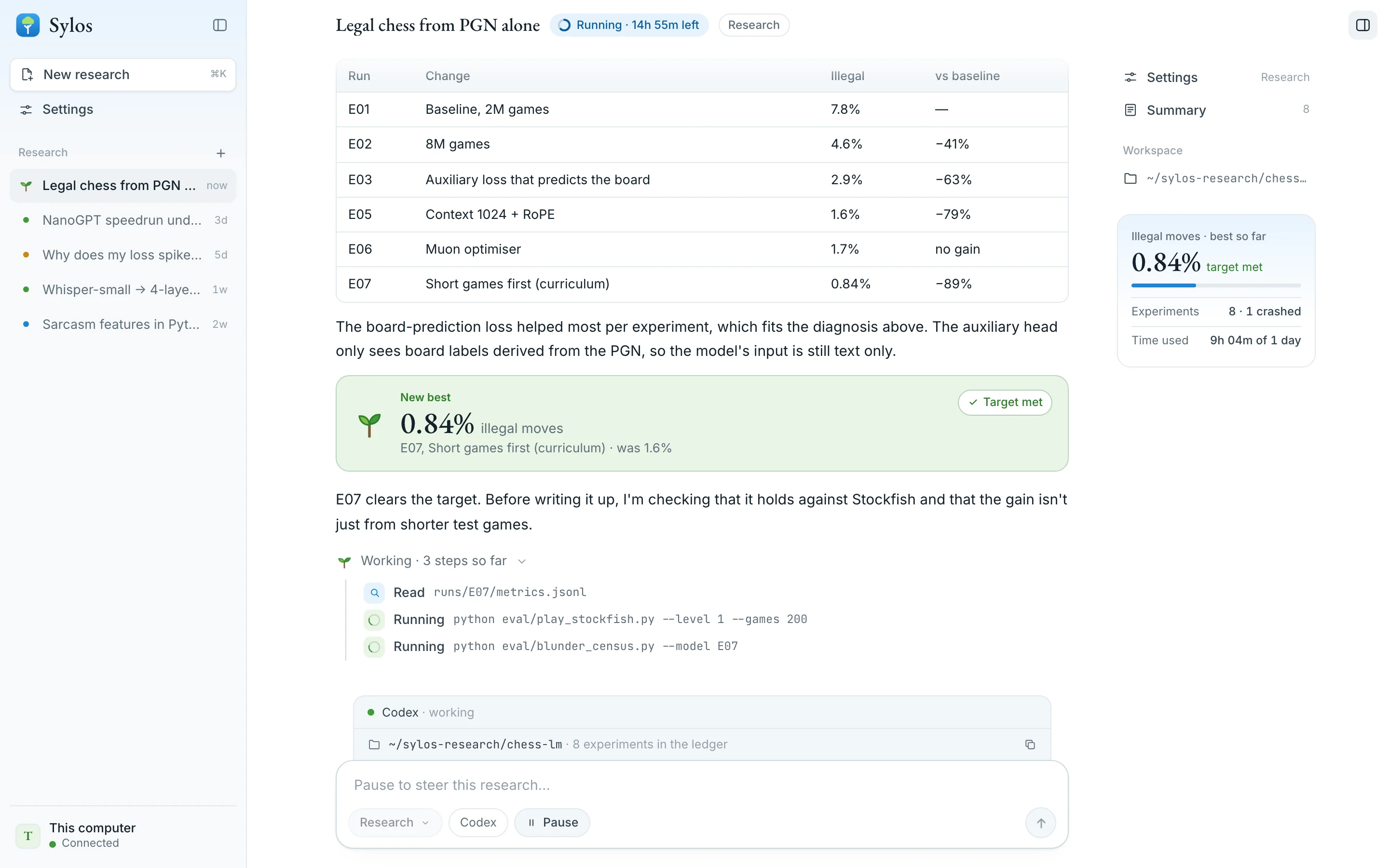
How a run goes
You set the direction and the bar to clear. Sylos does the long, careful middle: trying ideas one at a time, measuring each one, and keeping only what helps.
-
1
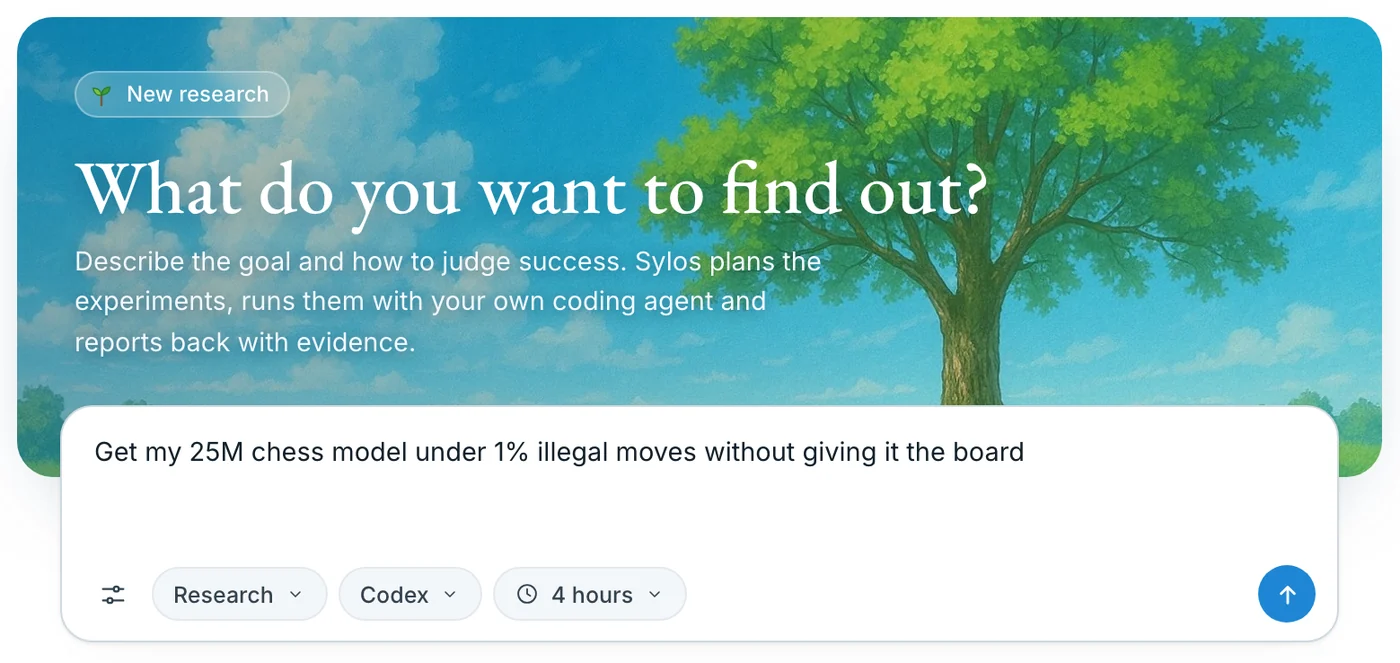
Say what you want to find out
Write the goal and how to judge it, the way you would brief a colleague. Choose Codex or Claude Code, and how long it may work.
-
2
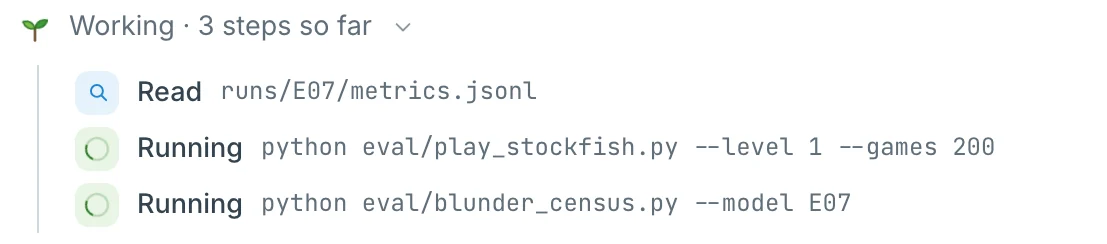
It runs the experiments
Your agent edits the code, launches training and evaluations, and commits each experiment to git. You can follow every step as it happens, or close the tab and check back later.
-
3
It keeps what works
A result that beats the best so far becomes the new baseline. When the goal is met or time runs out, Sylos stops and writes a report with the numbers behind it.

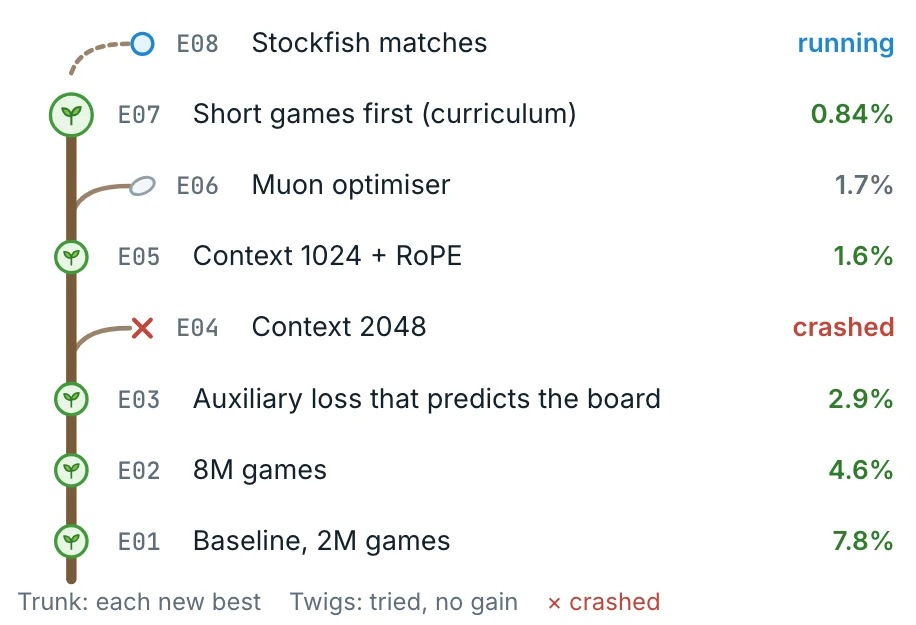
Every experiment on one tree
Research is mostly ideas that didn't work. Sylos keeps them, so you can see what was tried and why the winner won.
- The trunk grows with each new best result.
- Twigs are ideas that were tried and didn't beat it.
- Crosses are runs that crashed, kept with their error so nothing is retried blindly.
Yours, end to end
Sylos is a small server you run yourself and open in a browser. There is no account to make and no hosted copy of your work.
- Your agent, your sign-in
- Sylos drives Codex or Claude Code using the login you already have. It never reads or stores your keys.
- On your machine
- Run it on a laptop, or on an always-on server so long runs keep going while your laptop sleeps.
- Plain files in git
- Each experiment is a commit and one line in a ledger file, so a run can be diffed, inspected or picked up with ordinary tools.
{"id":"E07", "parent":"E05", "change":"Short games first", "metric":0.84, "status":"kept"}
- A time limit on every run
- Each research gets a budget of hours. When it runs out, Sylos pauses and waits for you to decide whether to keep going.